/

/

/

JW Marriott Bangkok

JW Marriott Bangkok

JW Marriott Bangkok

Smarter guest rooms, calmer operations

Smarter guest rooms, calmer operations

Smarter guest rooms, calmer operations

192,973 kWh saved

Electricity saved across air-side and water-side systems in the first six months.

793,118 THB returned

Operational savings returned to the bottom line at the hotel’s 4.11 THB/kWh rate.

91,662 kgCO₂e avoided

Roughly 92 tonnes of emissions avoided using Thailand’s TGO 2025 emission factor.

Customer Challenge

1. Maintenance that only moved when something broke.

Guest comfort depended on technicians physically walking to each room to diagnose and fix problems — on top of their day-to-day workload. In a 24/7 five-star environment, that meant a team stretched thin and often reacting after a guest had already noticed. Electricity bills, meanwhile, ran high because rooms were cooled whether or not anyone was in them.


2. A deployment that could not disturb the guest.

The hotel runs at near-full occupancy, with guests in their rooms around the clock. There was no quiet window to work in, no tolerance for noise, and no room left empty long enough to make installation convenient. Every step had to happen around live guests.


3. Reliable control at a scale the network wasn’t built for.

Two technical hurdles had to be solved together. The hotel’s existing network had blind spots and stability issues – and without a stable connection, a room simply can’t be controlled.

1. Maintenance that only moved when something broke.

Guest comfort depended on technicians physically walking to each room to diagnose and fix problems — on top of their day-to-day workload. In a 24/7 five-star environment, that meant a team stretched thin and often reacting after a guest had already noticed. Electricity bills, meanwhile, ran high because rooms were cooled whether or not anyone was in them.


2. A deployment that could not disturb the guest.

The hotel runs at near-full occupancy, with guests in their rooms around the clock. There was no quiet window to work in, no tolerance for noise, and no room left empty long enough to make installation convenient. Every step had to happen around live guests.


3. Reliable control at a scale the network wasn’t built for.

Two technical hurdles had to be solved together. The hotel’s existing network had blind spots and stability issues – and without a stable connection, a room simply can’t be controlled.

Solution

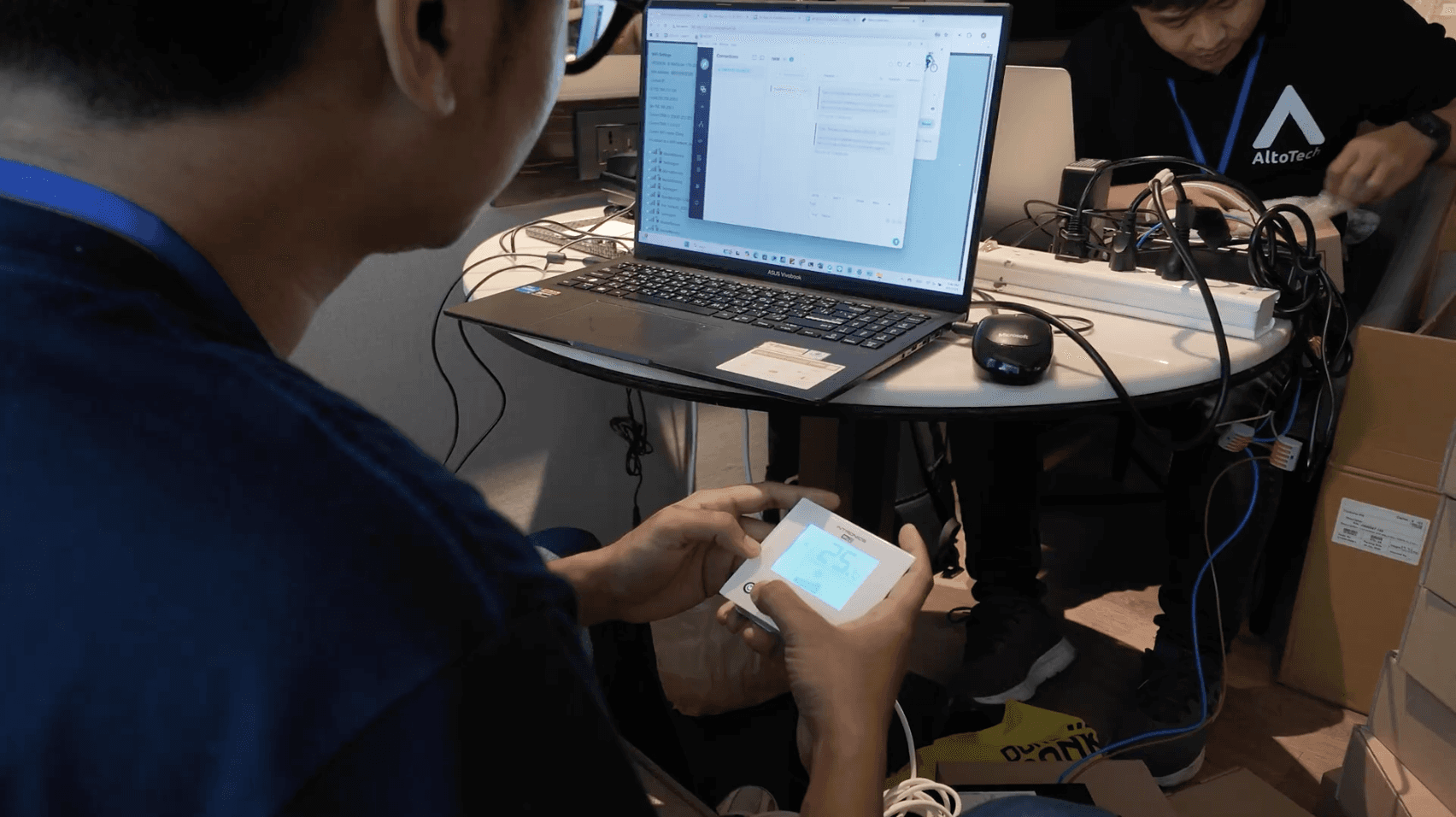
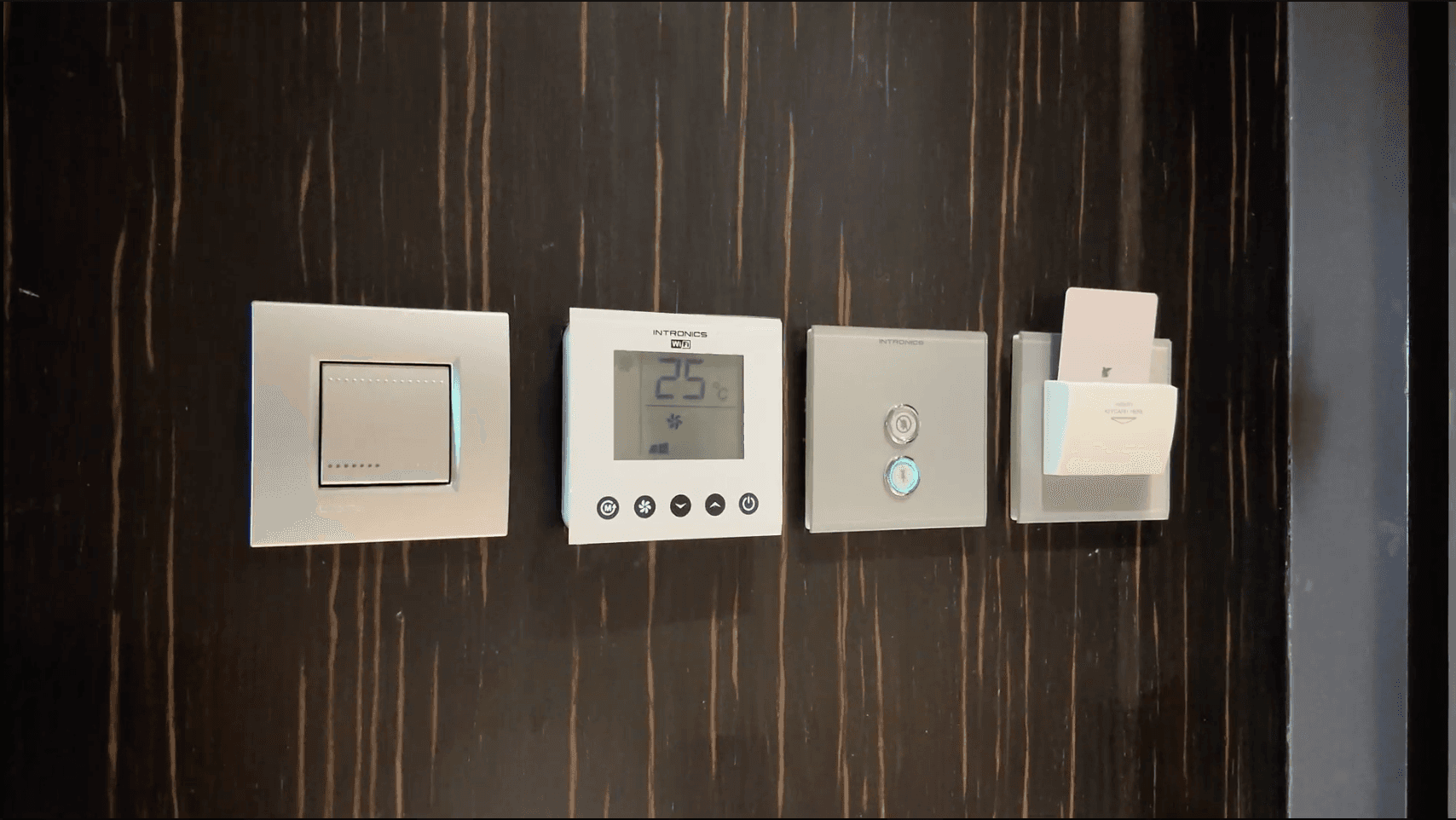
AltoTech delivered Alto CERO as four connected capabilities, each mapped to a problem the team actually had:

  • Occupancy-based climate control: automatically raises the setpoint or switches off the AC when a room is unoccupied, cutting electricity wasted on cooling empty rooms.

  • Real-time monitoring dashboard: gives operators a live view of occupancy, comfort, temperature and IAQ across every room, so issues surface before they become guest complaints.

  • Remote control and manual override: lets the team resolve many issues from the dashboard instead of dispatching a technician to the room, saving time on every call.

  • Historical data and analytics: makes it possible to look back and explain what happened, including problems that were previously invisible.

Why AltoTech

The hotel chose AltoTech because the team owned the full technical depth of the problem – its in-house HVAC expertise meant no hand-waving where other vendors raised doubt. The control logic was tuned on real-world data – occupancy, sleep-and-activity patterns, and CO₂ levels – and reliability-tested to run across thousands of devices on the hotel’s own network.


Day to day now

Alto CERO has become the team’s first move. When something comes up, they capture it and share it on Line, then check the platform to decide what to do next – leading with the data rather than a walk to the room.

Impact
In its first six months of operation, from December 2025 to May 2026, Alto CERO delivered measurable savings across the property, tracked in AltoTech’s monthly energy report:

  • 192,973 kWh of electricity saved – across both air-side (93,743 kWh) and water-side (99,230 kWh) systems.

  • 793,118 THB returned to the bottom line – the result ownership watches most closely.

  • 91,662 kgCO₂e avoided – roughly 92 tonnes, using Thailand’s TGO 2025 emission factor.

  • Monthly savings climbed from 20,748 kWh at launch to 47,265 kWh in May 2026 – a month that beat its savings target, reaching 106.7% of plan.


Beyond the numbers, the platform surfaces problems the team could never see before – including a CO₂ spike that revealed a leak in other hotel areas – and lets managers act the moment an issue appears on the dashboard, instead of dispatching a technician room by room.

Story

Looking Ahead

The immediate focus is making the system rock-solid on top of the hotel’s existing network, so reliable control is a given in every room. Beyond this site, the project is a proof point for the hospitality industry: what began as smaller-scale hotel work has matured into a repeatable, franchise-scale approach to smart guest-room management.

""

[Name, Title]

JW Marriott Bangkok

192,973 kWh saved

Electricity saved across air-side and water-side systems in the first six months.

793,118 THB returned

Operational savings returned to the bottom line at the hotel’s 4.11 THB/kWh rate.

91,662 kgCO₂e avoided

Roughly 92 tonnes of emissions avoided using Thailand’s TGO 2025 emission factor.

192,973 kWh saved

Electricity saved across air-side and water-side systems in the first six months.

793,118 THB returned

Operational savings returned to the bottom line at the hotel’s 4.11 THB/kWh rate.

91,662 kgCO₂e avoided

Roughly 92 tonnes of emissions avoided using Thailand’s TGO 2025 emission factor.