



Air-Side & Water-Side Integration
Save more energy by making your airside and waterside work as one system — coordinating AHUs, chillers, and everything in between for whole-building efficiency.
Property Type
Outcomes
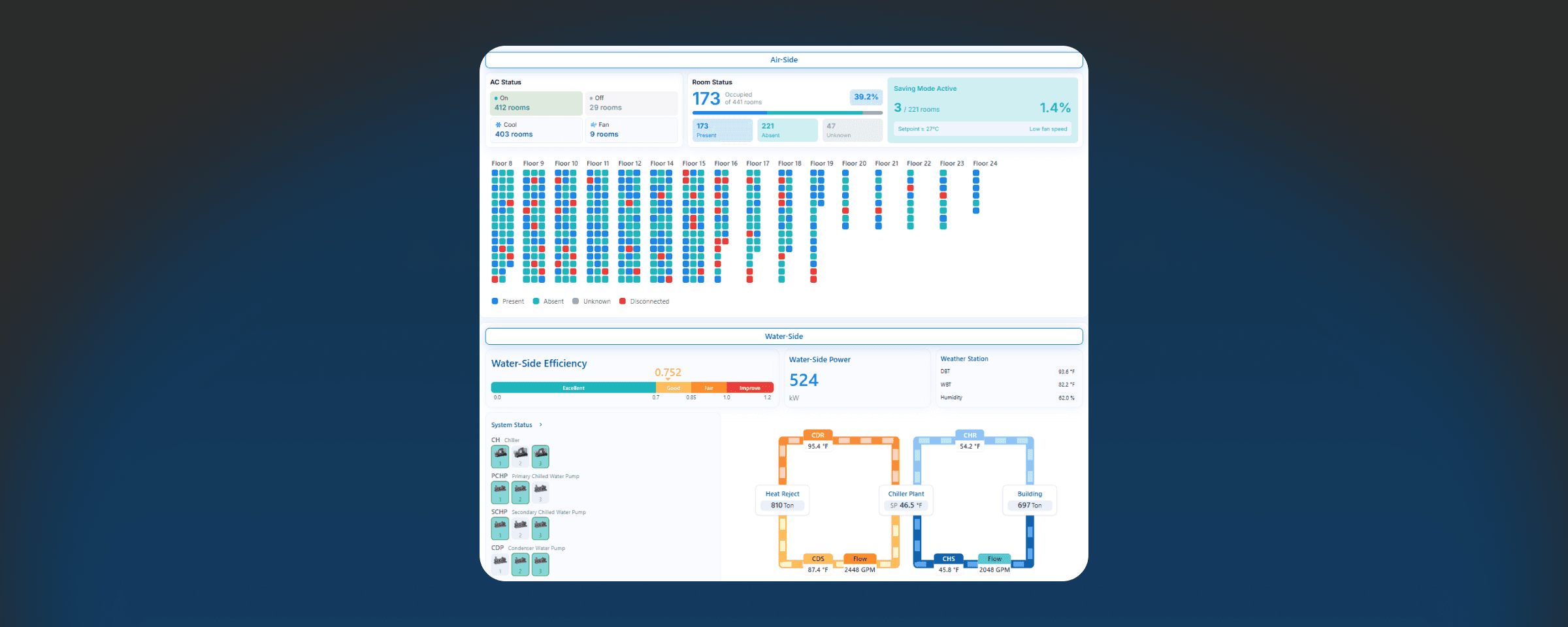
Most buildings control their air-side (AHUs, FCUs, zone temperatures) and water-side (chillers, pumps, cooling towers) separately, which leaves energy on the table. This system connects both sides — it understands how changes in cooling demand affect chiller plant efficiency, and makes coordinated decisions that minimize total energy use across the entire HVAC system.
Coordinated Control
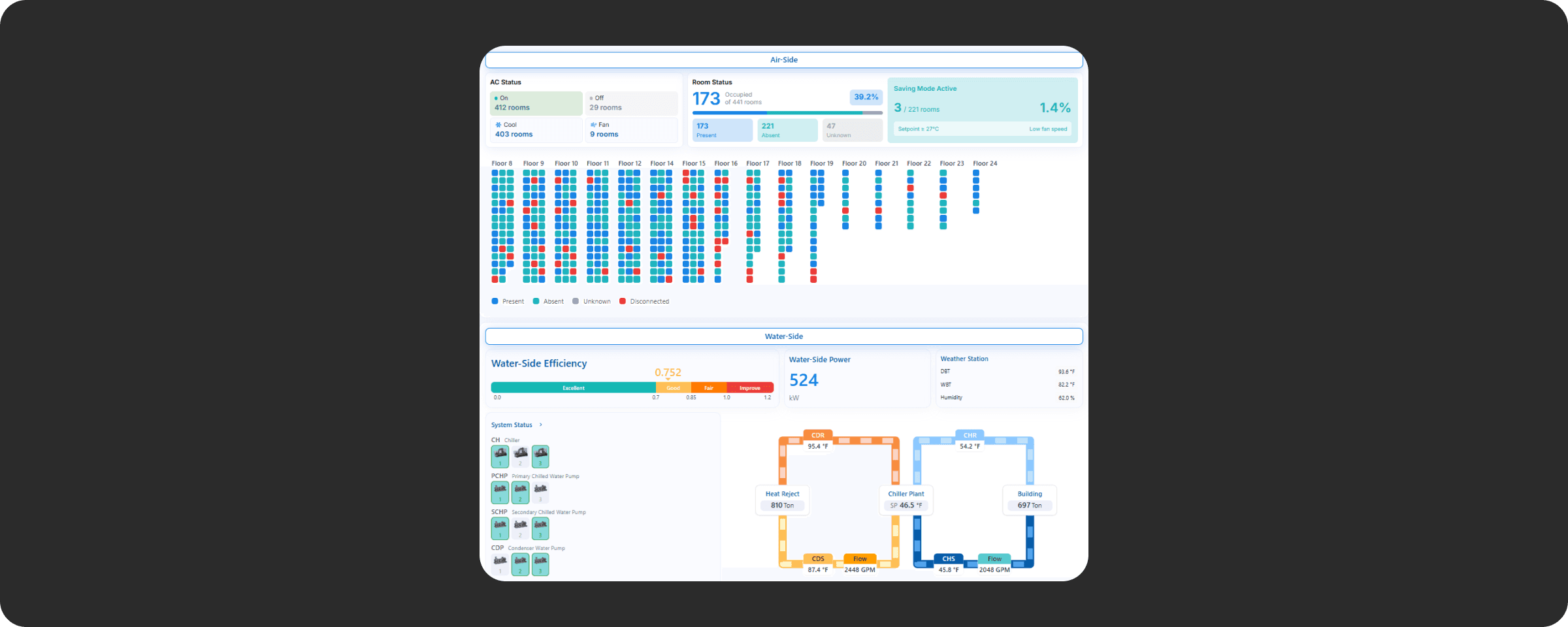
Setpoint changes, fan speeds, and chiller staging are optimized together instead of in isolation. The system accounts for chiller efficiency curves when deciding how to adjust air-side operations — because reducing cooling load doesn't always save energy if chillers end up running at a bad part-load ratio.
Smarter Chiller Staging
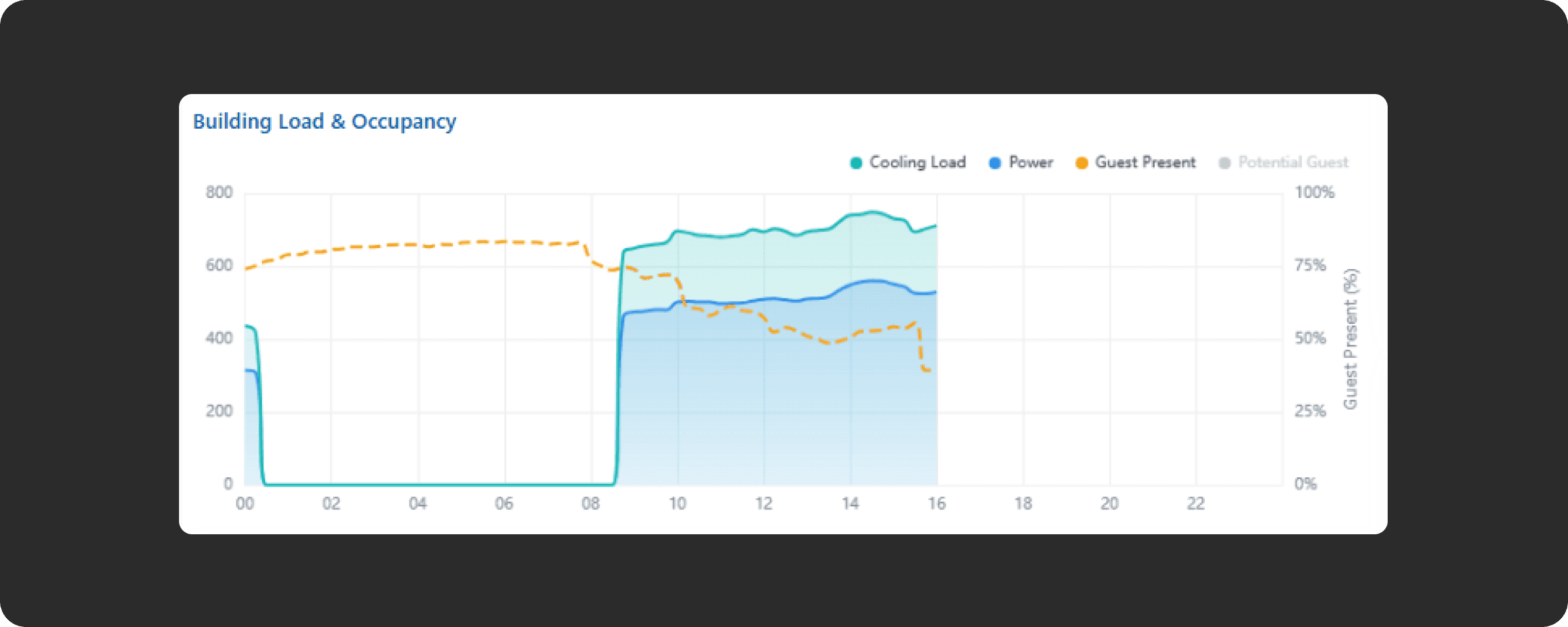
The system knows when reducing air-side load is enough to turn off a chiller, which is where the biggest savings come from. It balances zone comfort requirements with plant-level efficiency to find the optimal operating point.
Whole-System Visibility
Connects zone-level comfort data with plant-level efficiency, so operators and building owners see the full picture — from individual room temperatures to total plant energy consumption.
System Requirements
Alto OS: Hybrid-Cloud Platform
Alto OS offers a flexible and customizable hybrid-cloud platform that guarantees dependability, safety, and scalability. Whether you have an existing building automation system or not, Alto OS seamlessly integrates with equipment from any brand using open protocols.
Top Properties trust AltoTech to make their building smart







FAQs
Why does integrating air-side and water-side matter?
What building types does it work for?
What data does it need from the air side?
See whole-building optimization in action – get your demo
Luxury Hotel - Bangkok
Challenge: 400-room hotel with aging chiller plant running inefficiently due to disconnected control between guest room FCUs and central plant.
Solution: Deployed Air-Side & Water-Side Integration to coordinate FCU operations with chiller staging based on real-time aggregate cooling demand.
Results:
20% reduction in chiller plant energy consumption
Eliminated unnecessary chiller cycling during low-occupancy periods
Maintained guest comfort while reducing peak demand by 15%
ROI achieved within 10 months
Commercial Office Tower - Singapore
Challenge: 25-floor office building with separate BMS vendors for air-side and water-side, resulting in no coordination between systems.
Solution: Implemented integration layer to unify control logic across both systems, optimizing chiller staging based on actual zone-level demand rather than supply water temperature alone.
Results:
18% overall HVAC energy savings
Reduced chiller runtime by enabling strategic load shedding
Improved tenant comfort scores by 12%
Full visibility dashboard for facility management team
Shopping Mall - Thailand
Challenge: Large retail complex with highly variable occupancy patterns causing chillers to frequently operate at inefficient part-load conditions.
Solution: Air-Side & Water-Side Integration to dynamically adjust AHU supply air temperatures and fan speeds in coordination with chiller staging decisions.
Results:
22% reduction in total HVAC energy costs
Optimized chiller part-load operation across varying mall traffic
Better coordination between tenant zones and central plant
Annual carbon reduction of 350 tons CO₂
Related Apps

Chiller Optimization
AI-driven chiller plant optimization app that continuously learns from real-time + historical data to cut kWh, reduce peak demand, and stabilize chilled-water performance

Load Forecast
Predict your building's energy demand 24 hours ahead, hour by hour, enabling smarter equipment scheduling and proactive energy management.
Air-side Optimization
Reduce HVAC energy waste by 20–35% with AI-driven air-side optimization that dynamically adjusts Supply Air Temperature (SAT) and fan speed in real time.