


Customer Challenge
The site runs like a small city. Around a hundred operations staff keep a campus of new employees, vocational trainees, and visitors comfortable across a hotel, a restaurant, and the learning spaces in between. When a room felt too warm or too cold, the people in it did not file a ticket in a system. They told a staff member directly, and a technician was sent to nudge the setpoints by hand.
That was the rhythm: complaint, dispatch, adjust, repeat. Every round cost man-hours, and every adjustment came after someone was already uncomfortable. The team was also flying half-blind. Their sensors reported the temperature in a space but nothing about the air itself, so the indoor air-quality parameters that actually shape how a room feels were invisible to them.
Solution
The deployment was deliberately light. AltoTech layered Alto CERO over the existing automation rather than ripping anything out: a single Alto CERO box, five wireless air-quality sensors, and control and monitoring across thirteen VRF units, covering five zones of the campus to start. Nothing already in daily service had to be disturbed.
On top of that thin hardware footprint, four things went to work together:
Air-side control on autopilot. The VRF units steer toward a thermal-comfort target instead of a fixed number on a thermostat, so the building can move ahead of complaints rather than chase them.
Automatic fault detection. The system watches equipment for the kind of drift that quietly drives up downtime and maintenance costs, flagging problems before they surface as discomfort.
Automated analytics and reporting. The team's regular reports build themselves, taking the manual assembly off their plate.
A visitor-facing dashboard. The campus's environmental performance becomes something it can show, turning sustainability into part of its own brand story.
Keeping humans in control
Putting AI in charge of a live building only works if it never quietly takes over the things that matter for safety, and that line was drawn explicitly. AltoTech's intelligence optimizes setpoints and makes sure its strategies stay safe and efficient, but it does not start or stop equipment; the onsite operators own that, on their own schedules and safety procedures. Operators can suspend the AI and override locally at any time, then hand control back to Auto once conditions are safe. In an emergency, AltoTech provides remote diagnostics and guidance while the people on site isolate equipment and escalate. Optimization runs by itself in normal operation; authority over anything safety-critical stays with the humans.
Impact
The change the team felt first was not a percentage. It was visibility. For the first time they could see indoor air quality, not just temperature, which meant more data and a clearer read on how each space was actually performing. And the day-to-day shifted from manual to automatic: comfort that tunes itself, instead of a technician walking over with every complaint.
The initial deployment is the opening chapter, and it is built to grow: the plan is to scale the system to roughly four times its current footprint as the early results build confidence. For AltoTech, it points to a wider opening across Southeast Asia, where plenty of buildings run capable automation but lack the AI layer, the modern operator experience, and the visitor-facing sustainability view to sit on top of it. Layering intelligence over what is already installed, instead of replacing it, is how that gap closes.
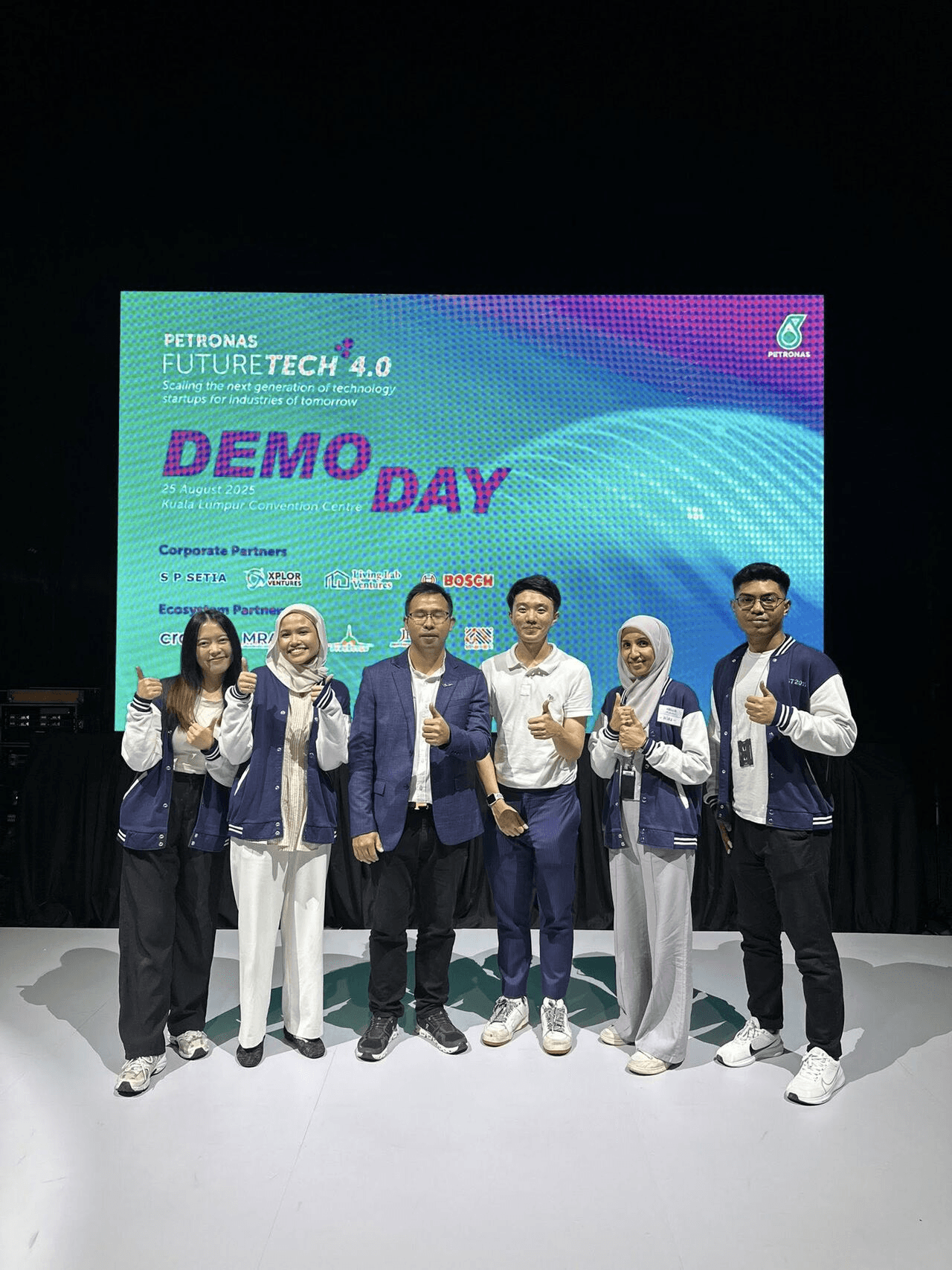
At a PETRONAS training campus in Malaysia, AltoTech layered its Alto CERO platform over the building's existing automation to make comfort proactive instead of reactive. The engagement began with a win: where other entrants in a PETRONAS innovation hackathon pitched materials or financials, AltoTech's proposal was the one built around energy and comfort, and it became a proof of concept on site.